Organizers
Co-Convenors: Holly Ann Garnett (Royal Military College / Queen's University, Canada), Toby James (University of East Anglia, UK), Anthony J. DeMattee (The Carter Center, USA)
Conference Administrators: Hilal Sert (Georgia State University, The Carter Center) and Sofia Caal-Lam (EIP Project Coordinator)
*This is a free conference
PROGRAMME
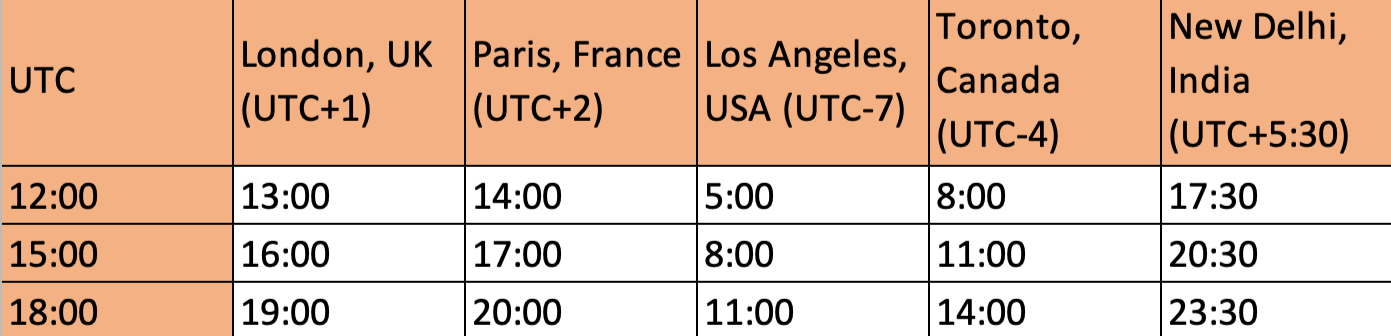
Panels will take place at 8am, 11am, and 2pm EDT/12pm, 15pm, and 18 pm UTC
Panels will follow the following format for most panels (1.5 hours total):
Welcome by Chair.
Panelist presentations (10-15 minute each), in order of programme.
Discussant comments (15 minutes).
Q&A Period – led by the Chair. You may type questions into the chat box or raise your hand for the chair to recognize you to speak, but the format remains the discretion of the Chair.
Panel 1: Electoral Integrity at the Polls
Monday, July 6 at 8:00 AM (EDT)
Chair: Holly Ann Garnett (RMC/Queen’s/EIP)
Discussant: Mitchell Brown (Auburn University)
How Awareness of Poll Watchers Shapes Beliefs about their Impact – Mollie Cohen (Purdue University) and Geoffrey Sheagley (University of Georgia)
Balancing Around the Ballot Box? Party-Nominated Poll Workers and the Myth of Balance – Martyna Hoffman (Political Accountability Foundation)
Electoral Meltdown? Applying Perrow’s normal accident theorem to the 2021 Berlin elections – Daniel Hellmann (Institute for Parliamentary Research)
When Changing Voters Changes Elections: Evaluating Determinants of Electoral Shift in Georgia, 2016-2022 – Arica Schuett (Emory University)
Proxy voting in the Netherlands – Leontine Loeber (Vrije University Amsterdam)
Panel 2: Election Design
Monday, July 6 at 11:00 AM (EDT)
Chair: Kenneth Rushworth (University of Manchester)
Discussant: Anne Pitcher (University of Michigan)
Presidential Influence in Electoral Reform: District Magnitude and Institutional Constraints – Hoju Cheong (Kyonggi University)
Paternalism vs. Descriptive Representation: Place-Based Representation and The Curious Case of African Candidate Eligibility Criteria – Michael Wahman (University of Texas at Austin)
Can Electoral Bias Lead to Executive Aggrandizement? – Bernard Tamas (Valdosta State University), and Melis Laebens (Central European University)
Snap Elections on the Rise: Implications for Governance and Democracy – Cassandra Emmons (International Foundation for Electoral Systems & Cornell University), Luc Stedman (IFES)
Managed Contestation and the Political Economy of Reduced Electoral Competition in African Dominant-Party Systems – Antonetta Lovejoy Hamandishe
Panel 3: Election Observation
Tuesday, July 7 at 8:00 AM (EDT)
Chair: Kenneth K. L. Chan (Hong Kong Baptist University)
Discussant: Claudia Generoso de Almeida (NOVA FCSH)
Beyond the Final Report: The Long Shadow of Observer Missions on Post-2026 Uganda – Meshach Ampwera Koshaba (African Union, & Mbarara University of Science and Technology)
A Proposal for Measuring the Impact of Recommendations from National Election Observation Missions in Brazil – Ana Santano (University of Ceará)
Scrutinizing Citizen Election Observation: The Toxic Cocktail of USAID Democracy Withdrawal and Shrinking Civic Space – Rebecca Wagner (Peace Research Institute)
The Partisanship Conditional Effect of Western Election Observers on African Citizens' Electoral Legitimacy Perceptions – Rekai Rusinga (University of California, Davis)
Roundtable 1: On the Front-Lines: the Perspectives of Electoral Management Bodies
Tuesday, July 7 at 11:00 AM (EDT)
Chair: Marjorie Marona (Federal University of Minas Gerais)
Discussant: Sonali Campion (University of East Anglia)
Digital Transformation of Voter Registration and Its Impact on Democratic Participation in Nepal – Yogesh Aryal (Election Commission Nepal)
From Speculation to Trust: Communication Strategies that Strengthened Confidence in Malawi’s 2025 Elections – Sangwani Mwafulirwa (Malawi Electoral Commission)
Voluntary poll workers in the Dutch electoral process, bottlenecks and solutions – Niels Groeneweg (Electoral Council of the Netherlands)
Georgian Election Experience - Institutional and Technological Development, Institutional Challenges – Giorgi Sharabidze (The Election Commission of Georgia)
Panel 4: Candidates and Politicians
Tuesday, July 7 at 2:00 PM (EDT)
Chair: Joseph Klaver (University of Passau)
Discussant: Bernard Tamas (Valdosta State University)
How Often Did Politicians Mention the 2020 Election? Evidence from Twitter – Jacob Ausubel (George Washington University)
Mechanically Binding, Electorally Hollow: Gender Quotas in Low-Magnitude Districts – Iris Acquarone (Arizona State University), and Gonzalo Di Landro (University of Oxford)
Can’t Afford to Lose- Parliamentary Election Spending and Acceptance of Election Defeat – Nicholas Kerr (University of Florida), and Michael Wahman (University of Texas at Austin)
Post-Election Dispute Resolution in Malawi: Assessing Parliamentary Candidates’ Experiences and the Consequences for Democratic Legitimacy – Nicholas Kerr (University of Florida)
Politicians and Electoral Management in Canada – Valere Gaspard (University of Ottawa)
Panel 5: Information Environment
Wednesday, July 8 at 8:00 AM (EDT)
Chair: Philipp Müller (University of Mannheim)
Discussant: Philippe Mongrain (University of Antwerp)
Disinformation about electoral integrity: features and attributes – Andreu Casero-Ripollés (Universitat Jaume I de Castelló)
Beyond Participation Costs: Incentive Design and Political Interest – Mateo Villamizar Chaparro (Universidad Católica del Uruguay), and Carolina Bernal (Columbia University)
Strategic Alignment and Social Media Behavior of U.S. Congress Members – Da Gong (SUNY Geneseo), and Andong Yan (University of Hong Kong)
Artificial Intelligence and Electoral Integrity – Svitlana Chernykh (The Australian National University), and Nicholas Biddle (The Australian National University)
Panel 6: Contentious Elections
Wednesday, July 8 at 11:00 AM (EDT)
Chair: Eric Merkley (University of Toronto)
Discussant: Lorraine Minnite (Rutgers University)
Predicting Civilian Electoral Contention – Maya Dalton (Penn State University)
Between Finality and Accuracy: Vote Recount Institutions in European Democracies – Ivan Jarabinsky (Institute H21), and Patrik Mikoczi (Institute H21)
Media exposure and elections: can visibility deter violence? – Amalia Pulido Gomez (Instituto Electoral del Estado de México), and Lorena Torres Salmerón (Centro de Investigación y Docencia)
The electoral returns to vote buying: Evidence from Brazil – Almila Basak (Syracuse University), and Jessie Trudeau, (Syracuse University)
Between Breakdown and the Ballot – How Interim Governments Can Foster Legitimacy and Pave the Way for Credible Elections – Fernanda Buril (International Foundation for Electoral Systems (IFES))
Roundtable 2: Electoral Management Resiliency: Independence in Practice
Wednesday, July 8 at 2:00 PM (EDT)
Chair: Holly Ann Garnett (Royal Military College / Queen's University)
Lorenzo Córdova Vianello (National Electoral Institute of Mexico, Former President)
Jean-Pierre Kingsley (Elections Canada, Former Chief Electoral Officer)
Peter Wardle (Former Chief Executive of the Electoral Commission of the UK)
Panel 7: Voter Perceptions and Trust
Thursday, July 9 at 8:00 AM (EDT)
Chair: Matteo Ferroni (University of Missouri)
Discussant: Robert Downes (University of Connecticut)
When Are Elections Perceived as Undemocratic? Experimental Evidence from Ten Countries – Scott Williamson (University of Oxford), and Eddy Yeung (University of Oxford)
Early Voting Experiences and Voting Behavior in Adulthood: Evidence from Japan – Helix Lo (University of Tokyo)
Measuring Voter Satisfaction and Trust in Elections: Evidence from Anne Arundel County’s 2024 General Election Survey – Natalie Scala (Towson University), and Thessalia Merivaki (Georgetown University)
Natural Hazards and Elections: Challenges of Voter Inclusion – Sarah Birch (King’s College London), Erik Asplund (IDEA), Ferran Martinez i Coma (Griffith University), and Gwen Jones (King's College London)
Panel 8: Voter Inclusion and Accessibility
Thursday, July 9 at 11:00 AM (EDT)
Chair: Thomas Mustillo (University of Notre Dame)
Discussant: Robert Boatright (Clark University)
Public Outreach in Election Administration: Spending Patterns and Message Priorities – Travis Ridout (Washington State University), and Taewoo Kang (Siena University)
Convenient or Coercive? Vote by Mail in US Elections 2020 and 2024 – Susan Orr (State University of New York, Brockport), James Johnson (University of Rochester), Mayya Komisarchik (University of Rochester), and Sarah Birch (Kings College London)
Revisiting Out-of-Country Voting: the Dilemma of Large Diasporas and Wafer-thin Margins in Developing Countries – Syed Taha Ali (National University of Sciences Technology), Salman Shabbir, Ain Ul Zia (NUST-SEECS), Hina Binte Haq (NUST-SEECS), and Ronan McDermott, Hassan Mahmood (Institute of Business Administration)
Theme
Elections are crucial to achieving democratic governance. We welcome workshop papers that fall into any of the following themes:
-
Elections should distribute power by allowing a wider range of groups, individuals and parties to contest the election. Papers are welcome on issues including (but not limited to): candidate selection, party dynamics, and electoral systems.
-
Elections provide a unique opportunity for deliberation on key policy issues. Papers are welcome on issues such as campaign finance, the information environment, and traditional and social media.
-
Wide and even participation is needed to ensure that the whole population has the power to direct and influence representation and policy. We invite papers that consider issues such as enfranchisement, accessibility, registration, voting methods, and voter turnout.
-
Electoral Justice provides an essential pathway for citizens, candidates, parties and other stakeholders to seek legal address where there have been defects in the delivery of elections. We welcome papers on topics on election monitoring, electoral justice, disputed elections and public trust.
Types of Paper
Papers are welcome from all disciplines, including but not limited to political science, law and legal studies, development and contemporary political history.
We take a pluralistic approach to research – and welcome papers from all types of research methods. This might include studies using narrative case-studies, process tracing, experimental designs, mass and expert panel surveys, systematic aggregate data, or political theory. Studies could be based on a single country or be cross-national in nature.
We also welcome practitioner papers which highlight recent policy innovations and other perspectives from the field of elections.
PRACTICAL LOGISTICS
Our annual virtual conference will take place online, the week of July 6, 2026. Panels will be arranged to accommodate multiple time zones, with panels taking place across the week.
As well as standard thematic paper panels with discussants, there will be practitioner and civil society roundtables and opportunities to connect with old/new colleagues and friends around the globe.
Conference registration will be free to all paper presenters and delegates.
All accepted paper-givers are asked to upload a copy of their written papers to the workshop website by 26 June, as a condition of inclusion in the program. This requirement allows discussants and all other participants to read work in advance, maximizing time and opportunities for feedback and discussion.